In Johnson County, the List Price Isn't the Number That Decides Your Monthly Cost
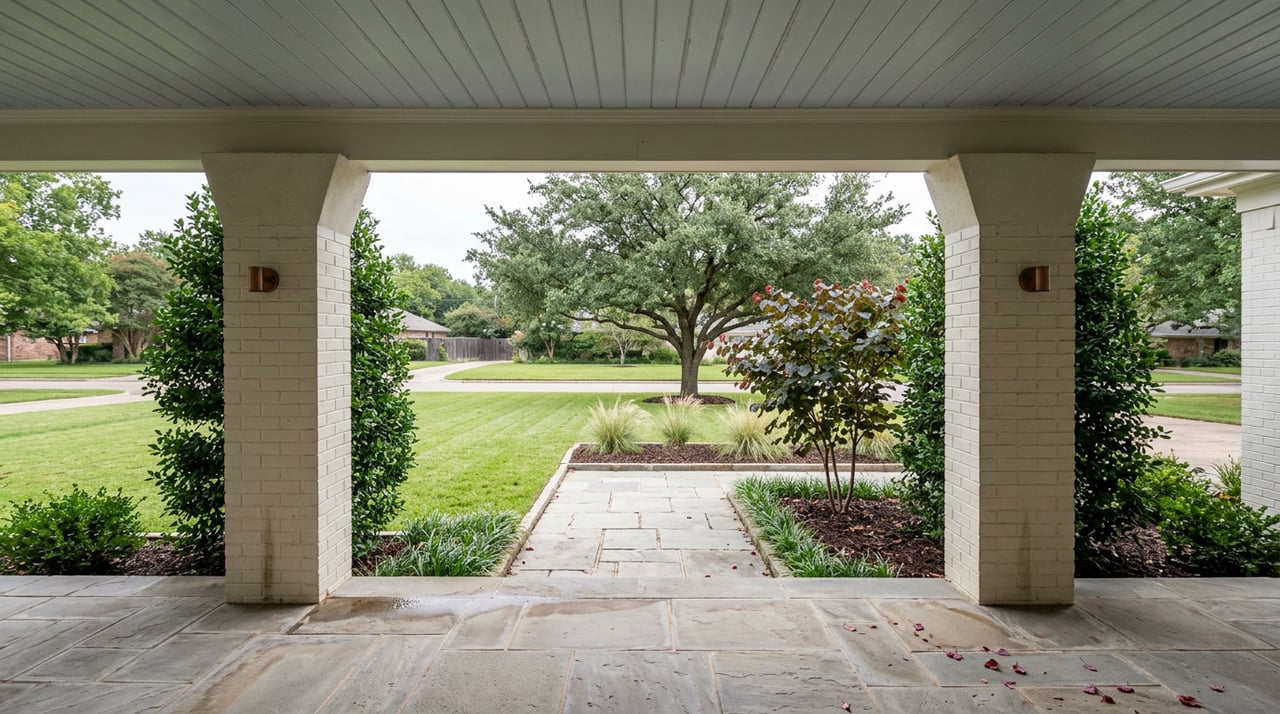
Picture two homes in Johnson County listed at the same price, both three-bedroom, both built around the same year, both a reasonable commute into Fort Worth. One sits closer to Cresson. The other sits inside Keene. On paper they look like the same purchase. On a mortgage calculator, they aren't close.
That gap has nothing to do with the sale price. It comes from a number almost nobody checks until closing: the combined property tax rate attached to that specific address. In Johnson County, that rate isn't one figure. It's a stack of overlapping levies set independently by the county, the city, the school district, and sometimes an emergency services district, and depending on where a parcel sits, that stack can run anywhere from roughly 1.7% to 2.6% of assessed value. Cresson sits near the bottom of that range at about 0.82%. Keene sits at the top, around 2.58%. That's not a rounding difference. On a $300,000 assessed value, it's the difference between a tax bill under $2,500 a year and one pushing past $7,700.
Johnson County's blended, countywide median effective tax rate lands around 1.87%. That's a useful number if you're comparing Johnson County to another county. It's close to useless if you're comparing one Johnson County address to another, because it flattens a real spread into a single tidy figure. A buyer who sees "1.87%" and assumes that's roughly what they'll pay anywhere in the county is working from an average that describes almost no specific property.
The real comparison has to happen at the city and school-district level, because that's where the rate is actually set. The Texas Comptroller's county directory lists at least ten independent school districts with territory inside Johnson County, including Alvarado ISD, Burleson ISD, Cleburne ISD, Godley ISD, Joshua ISD, Keene ISD, Grandview ISD, Rio Vista ISD, and Venus ISD, plus slivers of Granbury ISD, Mansfield ISD, and Crowley ISD that cross the county line. Since the school district portion is typically the single largest line on a Texas property tax bill, two houses ten minutes apart can land in entirely different tax realities simply because they're zoned to different districts.
Godley ISD is a clear example. Its own rate runs close to $1.47 per $100 of assessed value, noticeably higher than several of its neighbors. That's not an accident or a billing error. It reflects the bonds the district has issued to build the schools, roads, and infrastructure that new growth on that side of the county requires. A buyer comparing a home in Godley ISD to a similarly priced home in a slower-growth district is, in effect, comparing two different repayment plans for two different growth stories.
There's a second layer worth knowing if you're shopping anywhere near the Chisholm Trail Parkway corridor. Tax professionals who handle Johnson County appeals regularly point out that the parkway's development pressure has pushed appraised values up even for homes that don't sit directly along it. That means the assessed value half of the equation, the number the rate gets multiplied against, can already be inflated by proximity to a growth corridor before the tax rate ever comes into play.
There's genuinely good news layered into this, and it's brand new. Texas voters approved Proposition 13 in November 2025, which raised the school district homestead exemption from $100,000 to $140,000 starting with the 2026 tax year. For most homeowners, that translates to roughly $500 to $1,800 in annual school tax savings, depending on the district's rate. It's the largest homestead exemption increase the state has passed in years, and the Central Appraisal District of Johnson County certified its 2026 values on August 10, 2026, meaning this year's numbers are now locked in and reflect the new exemption.
Here's the part that matters for a comparison shopper: the exemption is a flat dollar amount subtracted from assessed value before any rate is applied. It helps every homestead in Johnson County by roughly the same dollar amount, but it doesn't touch the underlying rate itself. A home in Cresson still carries Cresson's rate after the exemption. A home in Keene still carries Keene's rate after the exemption. The floor rises for everyone. The gap between cities doesn't shrink.
That's worth sitting with if you're weighing two similarly priced homes in different parts of the county. The bigger exemption is real relief, but it doesn't erase the reason one address costs more to hold every month than another.
If you're actively comparing Johnson County cities right now, the sale price on the listing is only half the math. The other half is the combined rate that applies to that exact parcel, which you can pull directly from the Central Appraisal District of Johnson County's own records rather than assuming a single countywide number applies everywhere. Run the after-exemption number if the home will be your primary residence, not the sticker rate, since that $140,000 exemption changes the real annual cost meaningfully.
It's also worth remembering that assessed value and tax rate are two separate levers, and only one of them is something a homeowner can push back on. Texas law gives every property owner the right to protest their appraised value each year, and earlier this year the Central Appraisal District of Johnson County's own board commissioned an independent audit of its operations, a sign that the accuracy of that assessment process is getting outside scrutiny, not just pushback from homeowners.
None of this shows up on a portal's price filter. It shows up when you pull the actual numbers for the actual address, which is exactly the kind of comparison worth doing before you fall for a listing photo.
Does a lower tax rate automatically mean a lower total bill? Not necessarily. Assessed value matters just as much as the rate. A modestly priced home in a higher-rate city can still owe less than a pricier home in a low-rate city if the assessed values are far enough apart.
Is the new homestead exemption automatic? No. It applies to a primary residence and has to be filed with the Central Appraisal District of Johnson County. It doesn't apply to rental or investment properties, so an owner-occupant and a landlord on the same street can see very different bills even with identical assessed values.
Does one rate apply to every home within a city's limits? Not always. Emergency services districts and other special districts can layer additional percentage points on top of the base city and school rate depending on the exact parcel, which is another reason a specific-address check beats a general city assumption.
If you're weighing two Johnson County cities against each other and want the real, address-specific numbers instead of a countywide average, that's a conversation worth having before you write an offer. Michelle Martin and the Joy Michelle Realty Group team work these tax lines and school district boundaries every week across Johnson County. Schedule a Free Home Valuation and we'll walk through what a specific address actually costs to hold, not just what it costs to buy.
Stay up to date on the latest real estate trends.
For more than 30 years we have dedicated 150% to providing exceptional customer service with great care, diligence, and compassion. One of our main goals is to make your process as enjoyable and seamless as possible.